Showing posts with label Musical Instrument Museum. Show all posts

Tuesday, October 06, 2026

Flying through the Musical Instrument Museum

It's taken me much longer to go through all the photos I took when my niece Karen and I visited MIM (the Musical Instrument Museum), so I'm just going to dive in and start sharing. MIM is one place I highly recommend you visit if you ever find yourself in Phoenix.

Karen standing between the slot drums at the museum entrance.

Karen and I got to see The Magic Flute exhibit shortly before it closed.

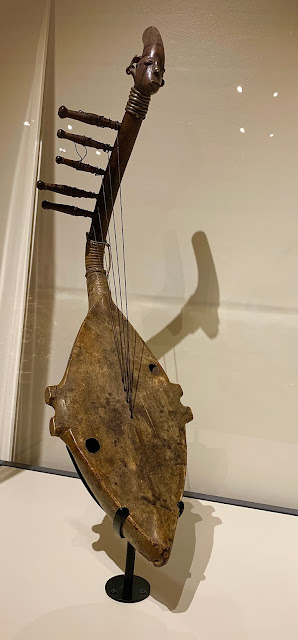
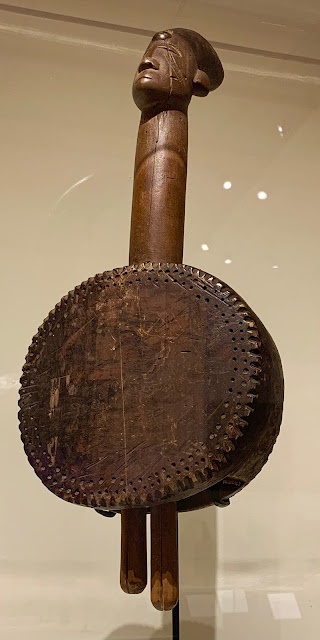
Made by the Chokwe people of Angola and the Democratic Republic of the Congo.

Left: Whistle made by the Comanche people, Oklahoma, 1983. Turkey bone and beads. Right: Whistle made by the Cheyenne people, Montana or South Dakota, c. 1900. Reed, animal skin, fiber, beads.

Samurai armor, Japan, early to mid-19th century. Metal, leather, lacquer, silk, wood.

Hitoyogiri, Japan, early 14th century. Bamboo, lacquer, pigment.

The clear glass flute was owned by Napoleon. The blue glass flute was owned by his brother, Louis, who was King of Holland.

Costumes from The Magic Flute at the Seattle Opera.

You can see here that Karen is making use of the headphones to learn more about the exhibits.

Tengai (basket hat), Japan, late 19th century. Reed, thread. Worn by Buddhist monks of the Fuke sect.

Yinggu (double-headed drum), 19th century. Wood, animal skin, paint, lacquer. A drum on a tall stand used in the court orchestra. Painted with a motif of dragons among clouds.

Detail

Another lute that I somehow neglected to get the details of. Behind it, you can see a foot, which reminds me of something that gobsmacked me. I am used to school groups in these places, and they run roughshod everywhere and scream and shout at the tops of their lungs. NOT HERE! Karen and I were very impressed at how carefully the children were monitored.

Detail. I find myself taking lots of close-ups because I'm in awe of the artistry and craftsmanship.

Pū (shell trumpet), French Polynesia, 19th century.

Another shell trumpet

Slit drums, Malakula Island, 1930-1950. Ironwood. Played fpr rituals on sacred beaches. The one on the left is a Boo-boo, and the one on the right, from Ambrym Island 1950-1969, is an atingting. I love their names and I love these drums!

Mariachis are represented here, of course. I love mariachi music.


One exhibit is hands-on, and I always have to go in there and bang the gong. Karen tried her hand at an instrument or two. (You can see "my" gong behind her.)

Durgā mask, Ghasi people, West Bengal, 2009. Papier-mâché, plastic, textile.

Rather unsettling, isn't she?

Lunch out on the patio before Dial-a-Ride came to pick us up. I'm not much of a drinker. It's been years since I had a margarita, but we discovered High Noon's flavored vodka seltzer. Yum!


I hope you enjoyed this whirlwind tour of MIM. There's always something new to see, and-- unlike many other places-- I can never leave without buying something at the gift shop!

Tuesday, May 07, 2024

With Daisy & Suzanne at the Musical Instrument Museum

Denis and I had wanted to go back to the Musical Instrument Museum (hereafter referred to as MIM), which is located 'way up in northeast Phoenix on Mayo Boulevard, but I'd been reluctant to do so. When we'd gone before, we still had our own wheels, and I was afraid that a trip of that distance on the Dial-a-Ride bus would rattle me around so much that I'd just want to find a hidden corner where I could sit and cry. (And I hate being a wuss.)

But I thought going was worth the risk because I thought our two nieces from England, Daisy and Suzanne, would really enjoy the place. I am so glad we went! Being a party of four with two of us on scooters meant that no one else was picked up and/or dropped off. We went straight to MIM on the freeway system, so no stop-and-go with mashing of gas pedal or slamming of brakes. Now that I know that, it means Denis and I will be able to go there more often. Yippee!

I'll shut up now and share some of the photos I took of our trip there. Come along on a virtual tour of MIM!


Daisy and Suzanne with the slot drums outside the entrance to MIM. I love those slot drums!


Suzanne and Denis checking out one of the first galleries.


A slide guitar from West Bengal, India.


Detail. I was appreciating the craftsmanship so much on many of the instruments that I took several closeups of details. Don't worry, I won't subject you to them.


A gong-chime from Thailand


A whistling water vessel from Peru


A Swiss musical picture frame.


Prince used this custom-finished grand piano during the Jam of the Year Tour (1997-1998) following the release of his triple album Emancipation.


First Nations rattle from British Columbia, Canada


Venetian glass orchestra


Orchestra detail


Kukeri costumes from Bulgaria. Costumed dancers adorned with jangling bells went house to house to scare away evil spirits and bring good health and harvest to the community.


Balinese shadow puppet theater


Balinese shadow puppets


Daisy and Suzanne in the Experience Gallery where there are many instruments you can play.


Denis banging a gong. This one is my favorite, and I gave it several good whacks.


Time for a duet.


Lunch outside MIM in the Cafe Allegro.


My haul from the MIM gift shop. That elephant makes me smile. The round ball is an Indonesian rattle, and the basket is from South Africa.


I hope you enjoyed your virtual visit!

Sunday, December 26, 2021

Legendary Musical Instruments at MIM

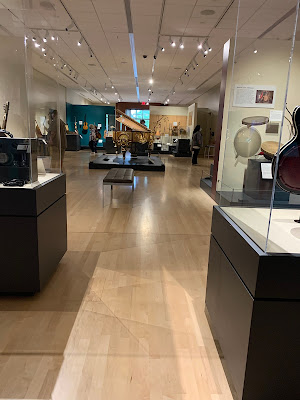
 On December 8, Denis and I went to the Musical Instrument Museum (MIM) to see the Treasures: Legendary Musical Instruments exhibit. The range of instruments showcased was incredible, and-- you know me-- I thought I'd share some of them with you.

Let's get started!

In the Target Gallery to see the Treasures: Legendary Musical Instruments exhibit.


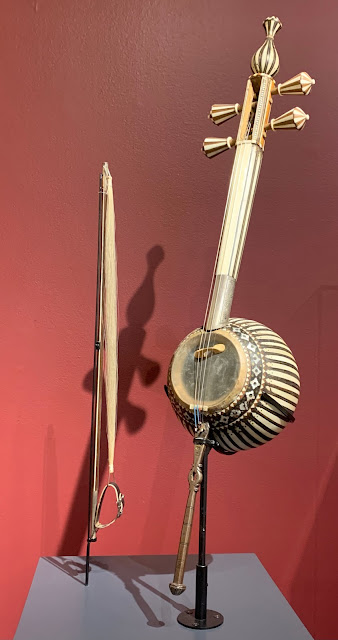
"Zendegi" kamancheh, a bowed spike lute from Iran, 1750-1794. Made from mulberry, rosewood, apricot, and fufel woods with camel bone, silver, and fish skin.


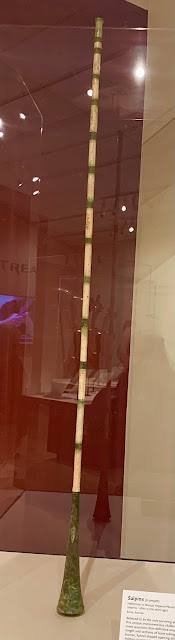
This long, thin ceremonial trumpet may not look like much, but it's a salpinx made of bone and bronze and is about 2,300 years old. It may very well have been played at one of the original Olympic Games to introduce the athletes.


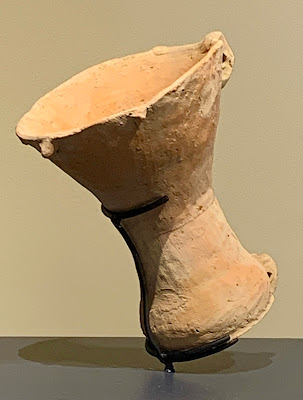
This Chinese paigu (goblet drum) is 6,000 years old and is the oldest instrument in MIM's collection.


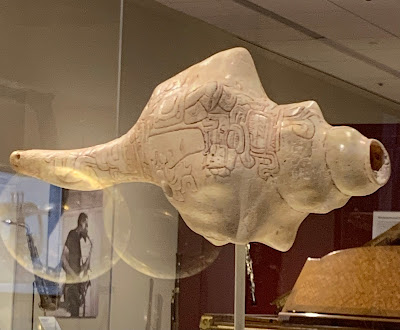
A Mayan conch shell trumpet made from shell and cinnabar. It dates from 250-400 AD.


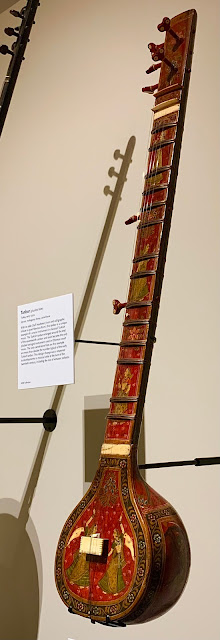
A sitār from northern India made in the early 1899s of wood, calabash, bone, and brass.


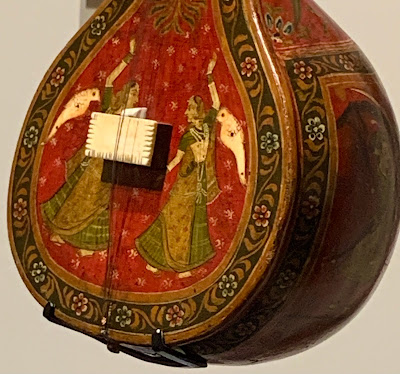
Sitār detail. The detail on some of these instruments simply blows me away.


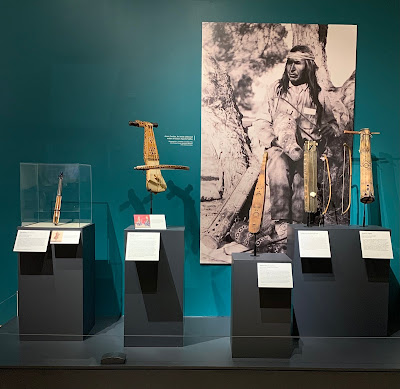
The exhibit on Native American instruments.


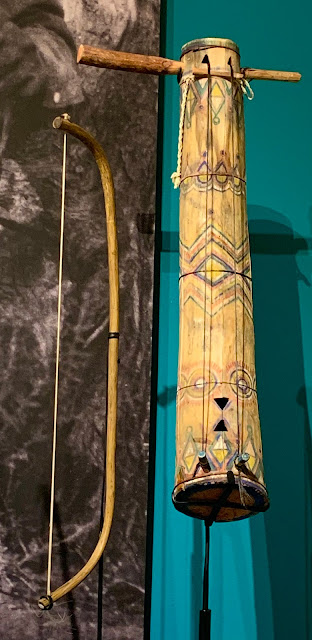
An Apache fiddle from Arizona. Made in the early 1900s of agave plant, horsehair, and pigment.


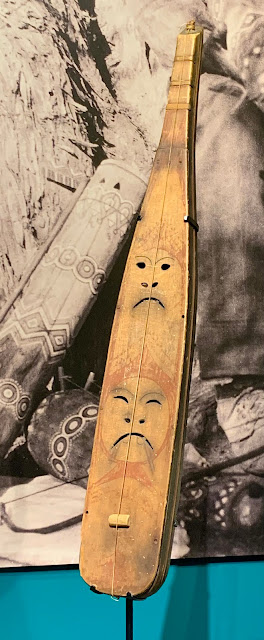
A kelutviaq (bowed lute) made by the Yup'ik people of Alaska in the late 1800s of wood and pigment.


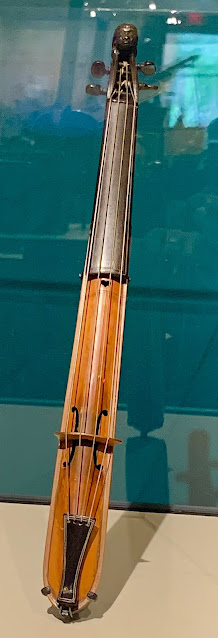
This pochette (pocket fiddle) was made in Paris, France, in 1671 of ebony, boxwood, and silver wire. It was a status symbol used by dance masters to teach dance steps to aristocrats and was made to fit in the master's large pocket.


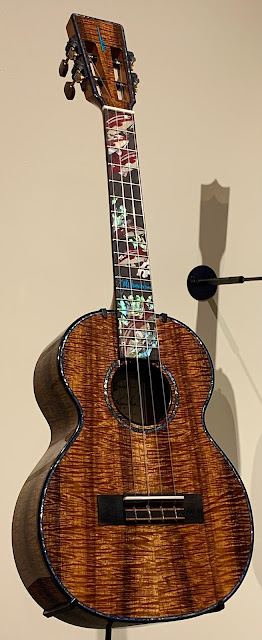
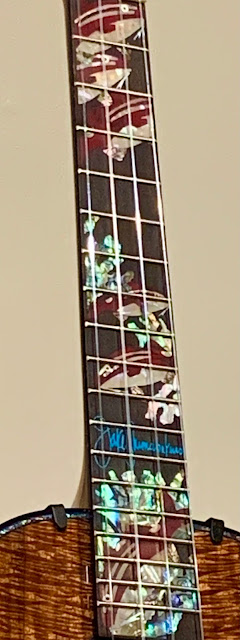
A Kumu model ukulele made in Honolulu, Hawaii, in 2021. Koa wood, mahogany, ebony, mother-of-pearl, abalone, reconstituted stone, turquoise, onyx. The shimmering abalone shell framing the koa wood body symbolizes the ocean surrounding the islands, and the fingerboard inlays depict a coral reef complete with red kumu fish. This instrument is GORGEOUS.


Detail of ukulele fingerboard.


Khatam tonbak (goblet drum) from Iran made from mulberry and rosewood, animal skin, camel bone, and brass.


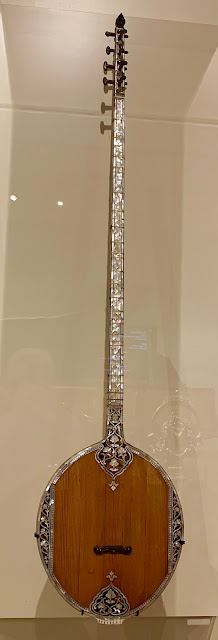
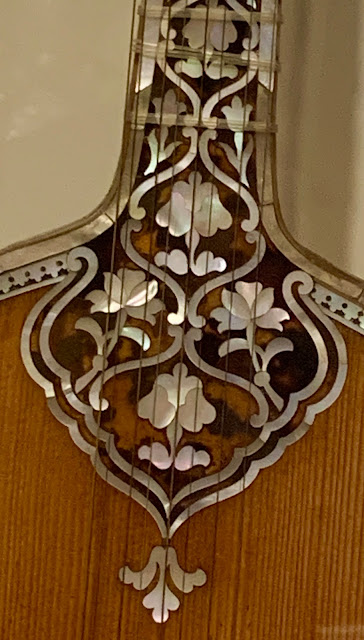
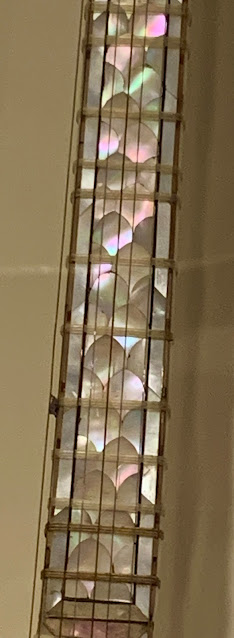
This Ottoman tanbur (plucked lute) was made in Turkey in the early to mid-1700s of wood, mother-of-pearl, tortoiseshell, gold leaf, and ivory.


Tanbur detail.


Tanbur detail. This tanbur and the ukulele were my two favorites in the exhibit. You should see how they both glow in the lighting!


Harp made by the Mangbetu people of the Democratic Republic of the Congo, 1875-1900, of wood, fiber, brass tack, copper, and goatskin. The harp was a praise-singer's instrument, played to elevate the status claims of  important individuals.


A bell made by the Mangbetu people of the Democratic Republic of the Congo. It was ceremonially sounded to accentuate a chief's speech or actions.


Now... if we could only hear all of these instruments being played!